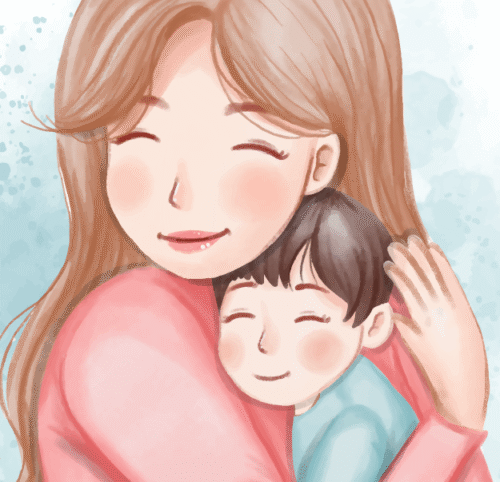

Talking to your frustrated child while feeling grateful and calm—isn’t that the dream?
Imagine knowing some magic words that can bring your frustrated child to a place of calm.
Imagine not getting angry and frustrated with your child’s anger, but instead being able to see and understand it.
Imagine being able to teach your child to understand and appreciate her anger.
Imagine your child asking you to listen to her when she is angry because she trusts you to help her calm down.
What a beautiful family we’re envisioning. No silent treatment, no shouting matches, no feeling lonely and misunderstood. This is a family that can work through any frustration together, where everyone belongs and feels loved and understood.
We know kids sometimes act out due to anger. Some might shout or slam doors; others might become distant and lock themselves in their rooms. As a parent, it is hard to remain calm and neutral in these situations. You want your child to be polite, respectful, and caring. You want her to be mindful of other people. You do not want to feel frustrated, anxious, or helpless while watching your angry child’s outburst.
What if you knew a way to stay connected with your child to help her process her frustration and anger? What if, after a good 15-minute chat, you could hug your child and let her continue her day with gratitude and joy?
Many concerned parents naturally want to do something about their child’s anger. This is what we call co-regulation of anger, which means “regulating anger together.”
Unfortunately, co-regulation attempts often slip into the realm of giving commands that dismiss the anger.
Don’t be angry.
You have no reason to be angry.
Stop being disrespectful.
Such short commands do not co-regulate a child’s anger, but on the contrary, intensify it.
Most children naturally want to understand their anger and express it in a socially acceptable way. To communicate their anger politely, children often need a pause, a safe place where they can look at their anger, understand it, and explore it.
When parents offer such a safe place, warm connection, and curiosity without judgement, children are able to understand their anger and calm down. This is how co-regulation works.
If you never learned co-regulation from your parents, but you want to co-regulate your child’s anger, my free e-book Eight Steps of Co-Regulation is for you.
I will guide you through an eight-step framework for co-regulating your child’s anger.
After reading Eight Steps of Co-Regulation, you will:
- learn how to establish a safe space in which your child can explore and understand their anger;
- understand which questions to ask and how to offer compassion;
- understand how to bring your frustrated child to a place of feeling relieved, grateful, and calm.
With co-regulation, anger gives way to love and tenderness. Children and parents can find connection, align their goals and visions, and resolve conflicts in a caring way.
I hope that through this guide, you can maintain warm connection and loving dialogue with your child. Happy reading and happy co-regulation!
Eight steps to co-regulation of anger
ABOUT THE AUTHOR
Alexandra Jaricova
Integrative psychotherapist
I am Alexandra, integrative psychotherapist from Leuven, Belgium. For my practice, I researched and developed techniques for healthy communication and emotion regulation. Here I collected them for you, your partner and your children. My mission is to teach you to befriend, understand, and regulate your anger. I am sure you will be able to talk to your frustrated child or partner in a way that calms them down and brings them to gratitude and calm.